
.This is only available in persian language
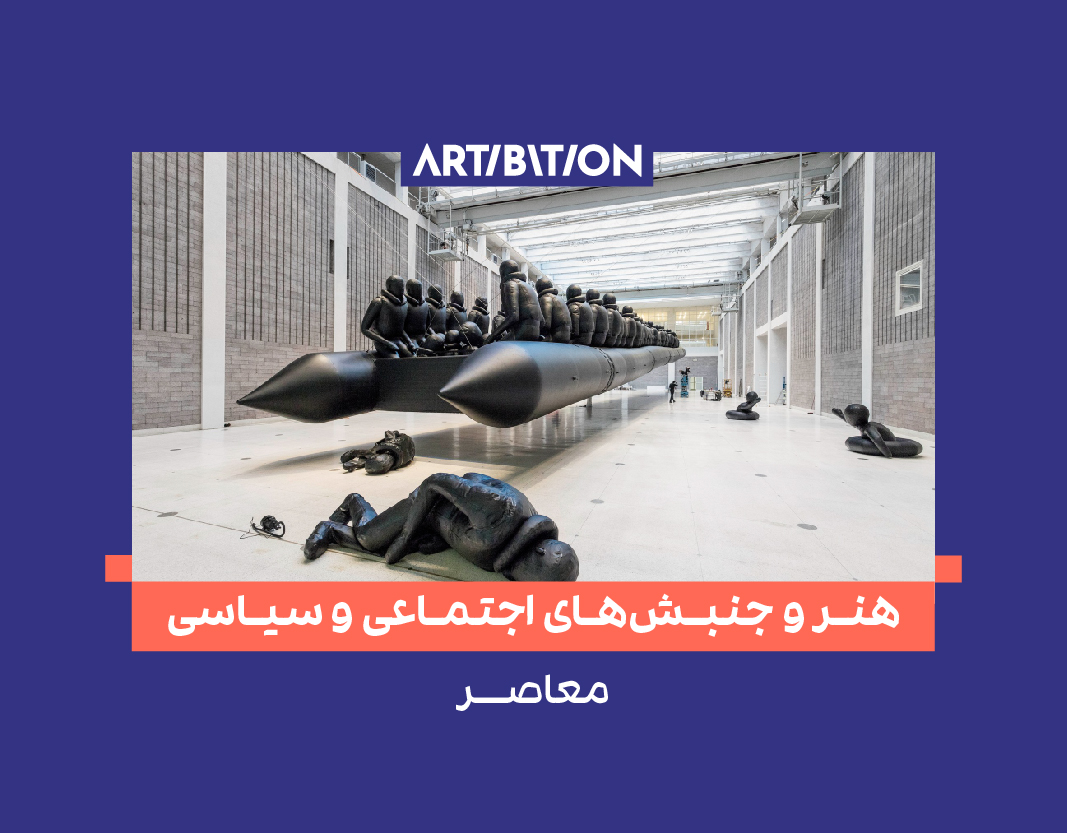
"Political and social movements and contemporary art"

Rahele Yousefi
The history of the contemporary era, from the second half of the twentieth century to the present, faces a fragmented world full of conflicting voices. After World War II, the formation of a bipolar order, the collapse of the Soviet Union, the expansion of global capitalism, communication and digital revolutions, and the rise of social networks blurred the notion of borders as the monopoly of a concept in a specific place. From the 1960s onward, art became highly site-specific and interactive, no longer limited to a single form or language, and emerged in formats such as video art, performance, installation, conceptual art, digital art, body art, and socially engaged artistic actions. In this context, art is considered an active element in social and political currents, and this relationship is reciprocal. Despite its diversity, one common feature of contemporary art is evident: art is no longer neutral, and even silence constitutes a form of stance. Considering the plurality of movements, this article examines examples of artistic events and movements that have been direct or protestive responses to the transformations of their societies.